
 Featured
All Papers
 Evaluation
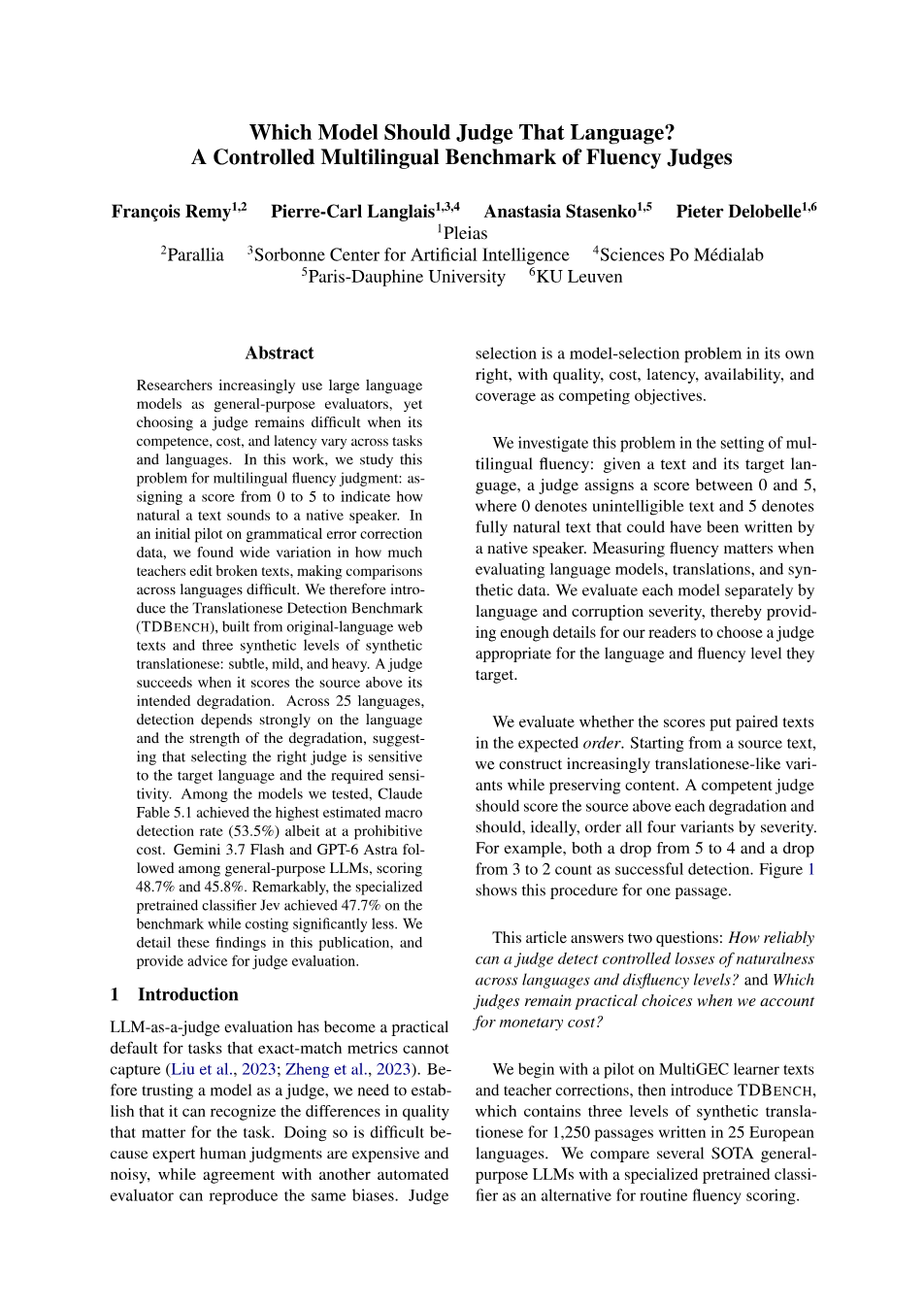
Which Model Should Judge That Language? A Controlled Multilingual Benchmark of Fluency Judges
Researchers increasingly use large language models as general-purpose evaluators, yet choosing a judge remains difficult when its competence, cost, and latency vary across tasks and languages. In this work, we study this problem for multilingual fluency judgment: assigning a score from 0 to 5 to indicate how natural a text sounds to a native speaker. In an initial pilot on grammatical error correction data, we found wide variation in how much teachers edit broken texts, making comparisons across languages difficult. We therefore introduce the Translationese Detection Benchmark (TDBENCH), built from original-language web texts and three synthetic levels of synthetic translationese: subtle, mild, and heavy. A judge succeeds when it scores the source above its intended degradation. Across 25 languages, detection depends strongly on the language and the strength of the degradation, suggesting that selecting the right judge is sensitive to the target language and the required sensitivity. Among the models we tested, Claude Fable 5.1 achieved the highest estimated macro detection rate (53.5%) albeit at a prohibitive cost. Gemini 3.7 Flash and GPT-6 Astra followed among general-purpose LLMs, scoring 48.7% and 45.8%. Remarkably, the specialized pretrained classifier Jev achieved 47.7% on the benchmark while costing significantly less. We detail these findings in this publication, and provide advice for judge evaluation.



.jpeg)
 Open Source
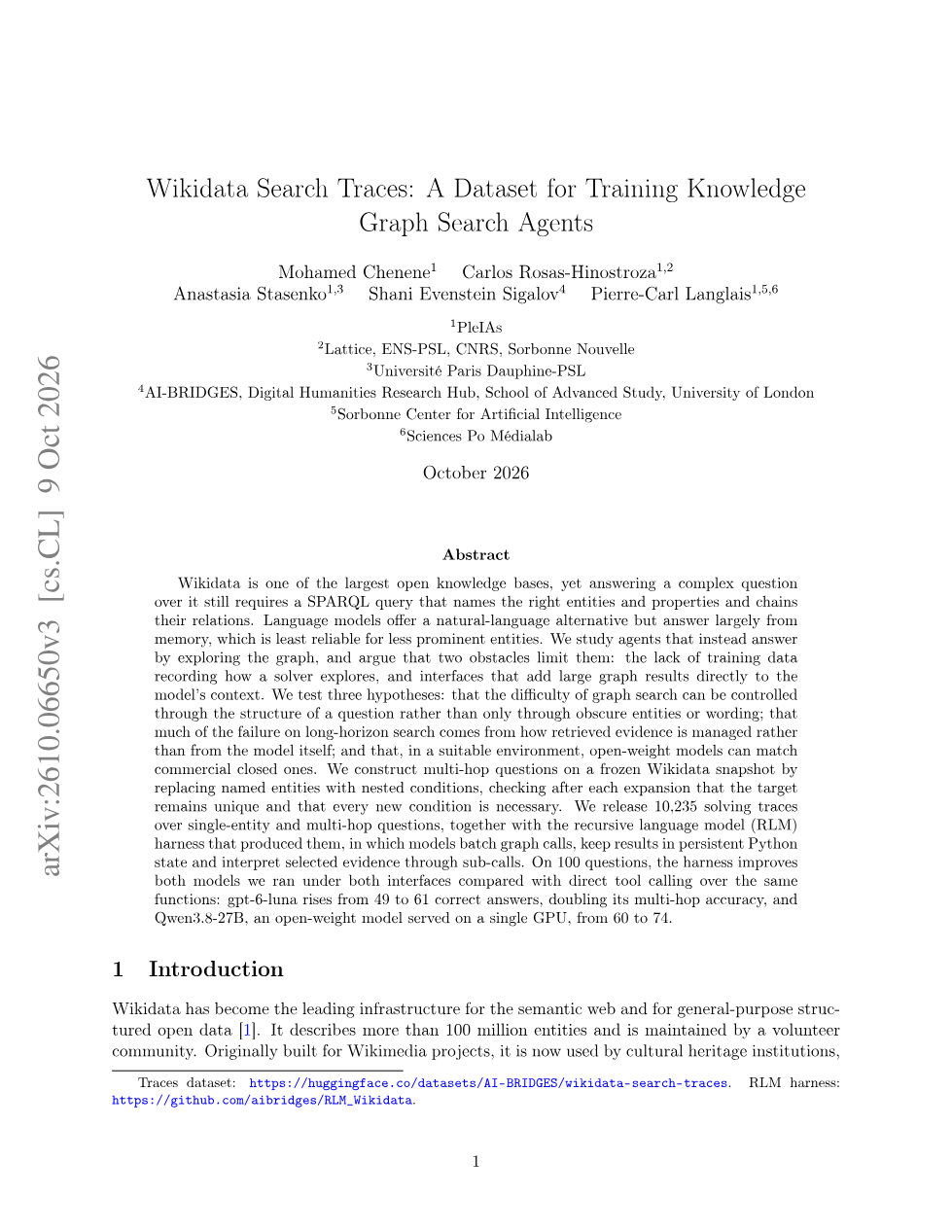
Wikidata Search Traces: A Dataset for Training Knowledge Graph Search Agents
Wikidata is one of the largest open knowledge bases, yet answering a complex question over it still requires a SPARQL query that names the right entities and properties and chains their relations. Language models offer a natural-language alternative but answer largely from memory, which is least reliable for less prominent entities. We study agents that instead answer by exploring the graph, and argue that two obstacles limit them: the lack of training data recording how a solver explores, and interfaces that add large graph results directly to the model's context. We test three hypotheses: that the difficulty of graph search can be controlled through the structure of a question rather than only through obscure entities or wording; that much of the failure on long-horizon search comes from how retrieved evidence is managed rather than from the model itself; and that, in a suitable environment, open-weight models can match commercial closed ones. We construct multi-hop questions on a frozen Wikidata snapshot by replacing named entities with nested conditions, checking after each expansion that the target remains unique and that every new condition is necessary. We release 10,235 solving traces over single-entity and multi-hop questions, together with the recursive language model (RLM) harness that produced them, in which models batch graph calls, keep results in persistent Python state and interpret selected evidence through sub-calls. On 100 questions, the harness improves both models we ran under both interfaces compared with direct tool calling over the same functions: gpt-6-luna rises from 49 to 61 correct answers, doubling its multi-hop accuracy, and Qwen3.8-27B, an open-weight model served on a single GPU, from 60 to 74.


 Training Data
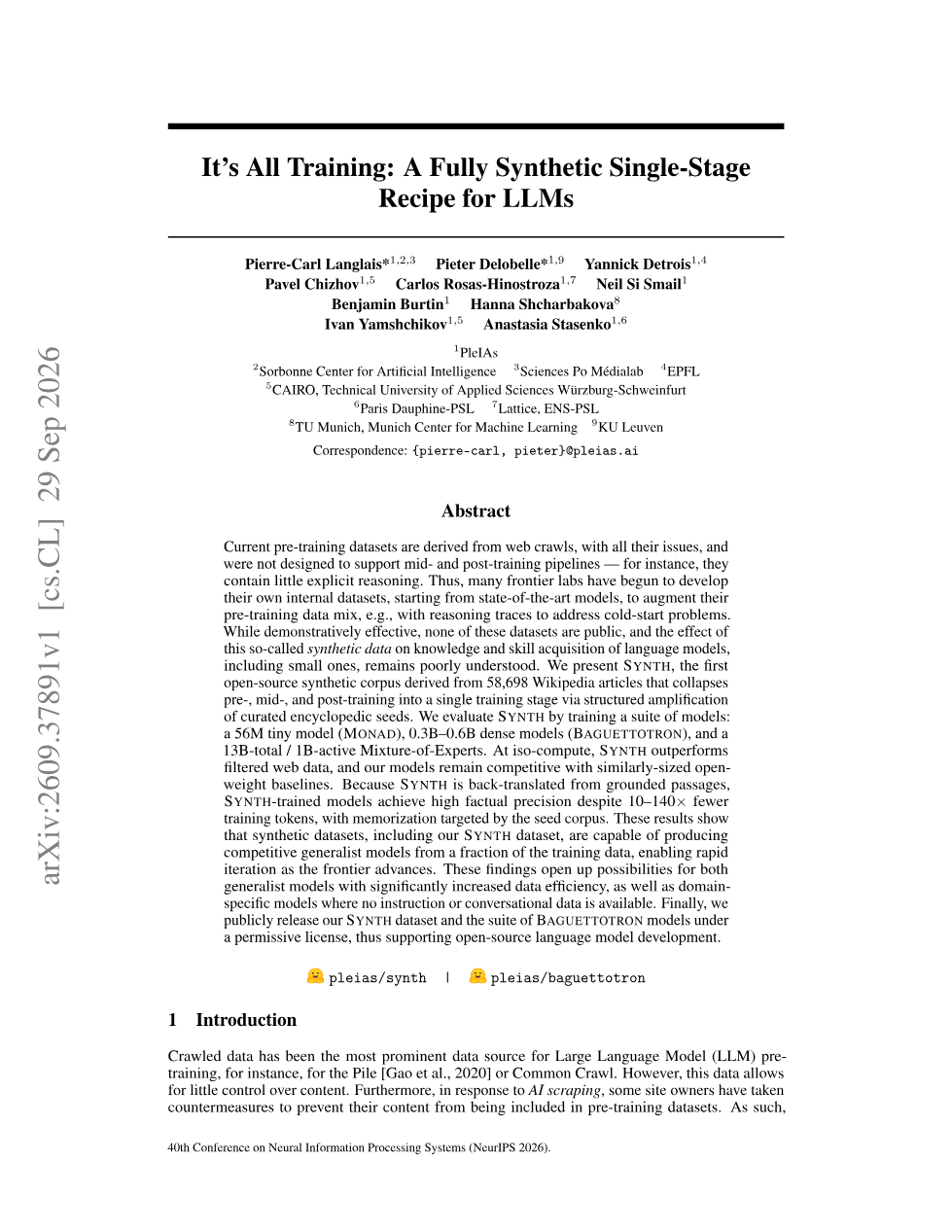
It's All Training: A Fully Synthetic Single-Stage Recipe for LLMs
Current pre-training datasets are derived from web crawls, with all their issues, and were not designed to support mid- and post-training pipelines--for instance, they contain little explicit reasoning. Thus, many frontier labs have begun to develop their own internal datasets, starting from state-of-the-art models, to augment their pre-training data mix, eg, with reasoning traces to address cold-start problems. While demonstratively effective, none of these datasets are public, and the effect of this so-called synthetic data on knowledge and skill acquisition of language models, including small ones, remains poorly understood. We present SYNTH, the first open-source synthetic corpus derived from 58,698 Wikipedia articles that collapses pre-, mid-, and post-training into a single training stage via structured amplification of curated encyclopedic seeds. We evaluate SYNTH by training a suite of models: a 56M tiny model (Monad), 0.3B-0.6B dense models (Baguettotron), and a 13B / 1B-active MoE. At iso-compute, SYNTH outperforms filtered web data, and our models remain competitive with similarly-sized open-weight baselines. Because SYNTH is back-translated from grounded passages, SYNTH-trained models achieve high factual precision despite 10-140x fewer training tokens, with memorization targeted by the seed corpus. These results show that synthetic datasets, including our SYNTH dataset, are capable of producing competitive generalist models from a fraction of the training data, enabling rapid iteration as the frontier advances. These findings open up possibilities for both generalist models with significantly increased data efficiency, as well as domain-specific models where no instruction or conversational data is available. Finally, we publicly release our SYNTH dataset and the suite of Baguettotron models under a permissive license, thus supporting open-source language model development.
.jpeg)
.jpeg)
 ICLR Oral
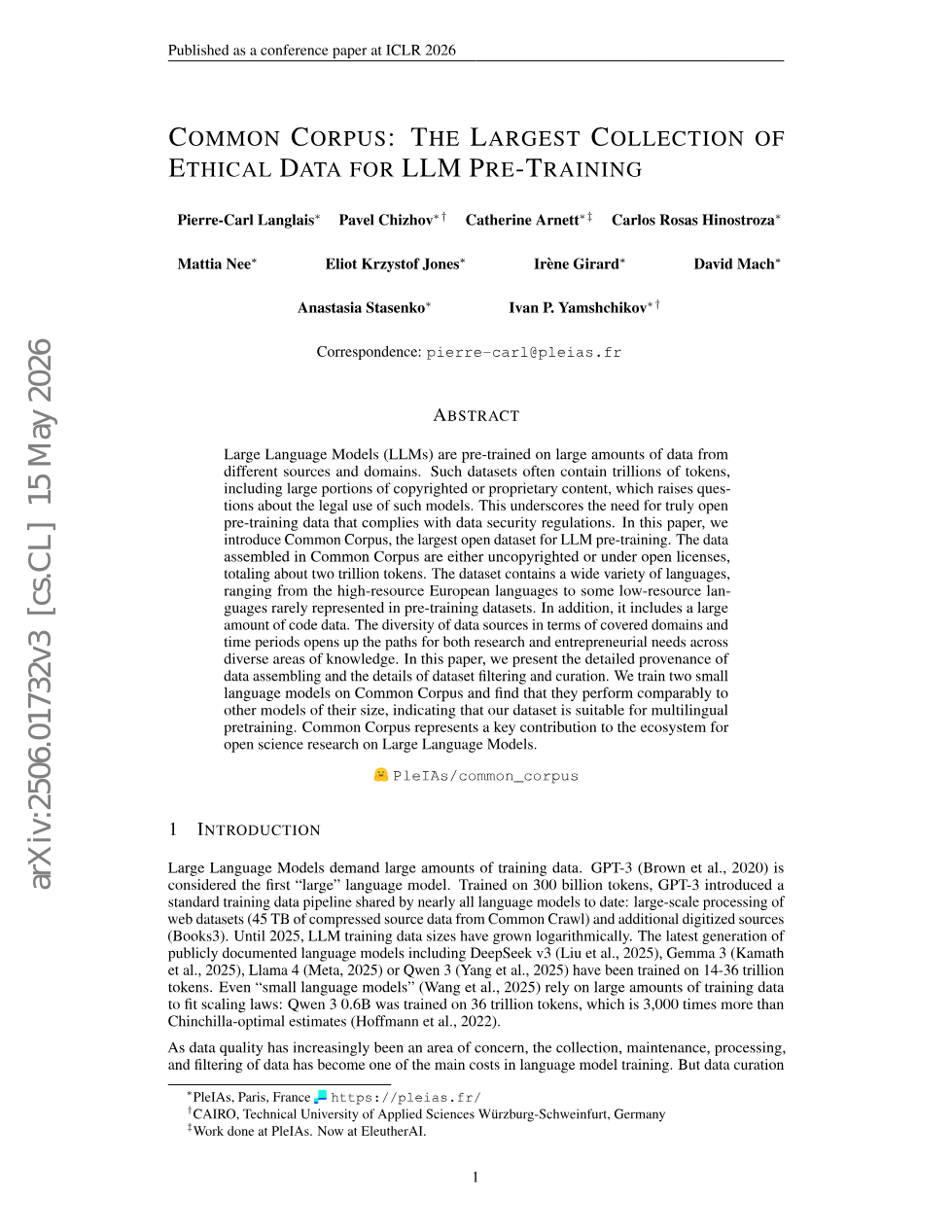
Common Corpus: The Largest Collection of Ethical Data for LLM Pre-Training
Large Language Models (LLMs) are pre-trained on large amounts of data from different sources and domains. Such datasets often contain trillions of tokens, including large portions of copyrighted or proprietary content, which raises questions about the legal use of such models. This underscores the need for truly open pre-training data that complies with data security regulations. In this paper, we introduce Common Corpus, the largest open dataset for LLM pre-training.

 Evaluation
Bye Bye Perspective API: Lessons for Measurement Infrastructure in NLP, CSS and LLM Evaluation
The closure of Perspective API at the end of 2026 discards what has functioned as the de facto standard for automated toxicity measurement in NLP, CSS, and LLM evaluation research. We document the structural dependence that the communities built on this single proprietary tool and discuss how this dependence caused epistemic problems that have affected - and will likely continue to affect - collective research efforts.
 ACL Findings
Model in Distress: Sentiment Analysis on French Synthetic Social Media
Automated analysis of customer feedback on social media is hindered by three challenges: the high cost of annotated training data, the scarcity of evaluation sets, especially in multilingual settings, and privacy concerns that prevent data sharing and reproducibility. We address these issues by developing a generalizable synthetic data generation pipeline applied to a case study on customer distress detection in French public transportation. Our approach utilizes backtranslation with fine-tuned models to generate 1.7 million synthetic tweets from a small seed corpus, complemented by synthetic reasoning traces. We train 600M-parameter reasoners with English and French reasoning that achieve 77-79% accuracy on human-annotated evaluation data, matching or exceeding SOTA proprietary LLMs and specialized encoders. Beyond reducing annotation costs, our pipeline preserves privacy by eliminating the exposure of sensitive user data. Our methodology can be adopted for other use cases and languages.
 ACL Main
From Where Words Come: Efficient Regularization of Code Tokenizers Through Source Attribution
Efficiency and safety of Large Language Models (LLMs), among other factors, rely on the quality of tokenization. A good tokenizer not only improves inference speed and language understanding but also provides extra defense against jailbreak attacks and lowers the risk of hallucinations. In this work, we investigate the efficiency of code tokenization, in particular from the perspective of data source diversity.
 ACL Main
Teaching old tokenizers new words: Efficient tokenizer adaptation for pretrained models
Tokenizer adaptation plays an important role in adapting pre-trained language models to new domains or languages. In this work, we address two complementary aspects of this process: vocabulary extension and pruning.
 Evaluation
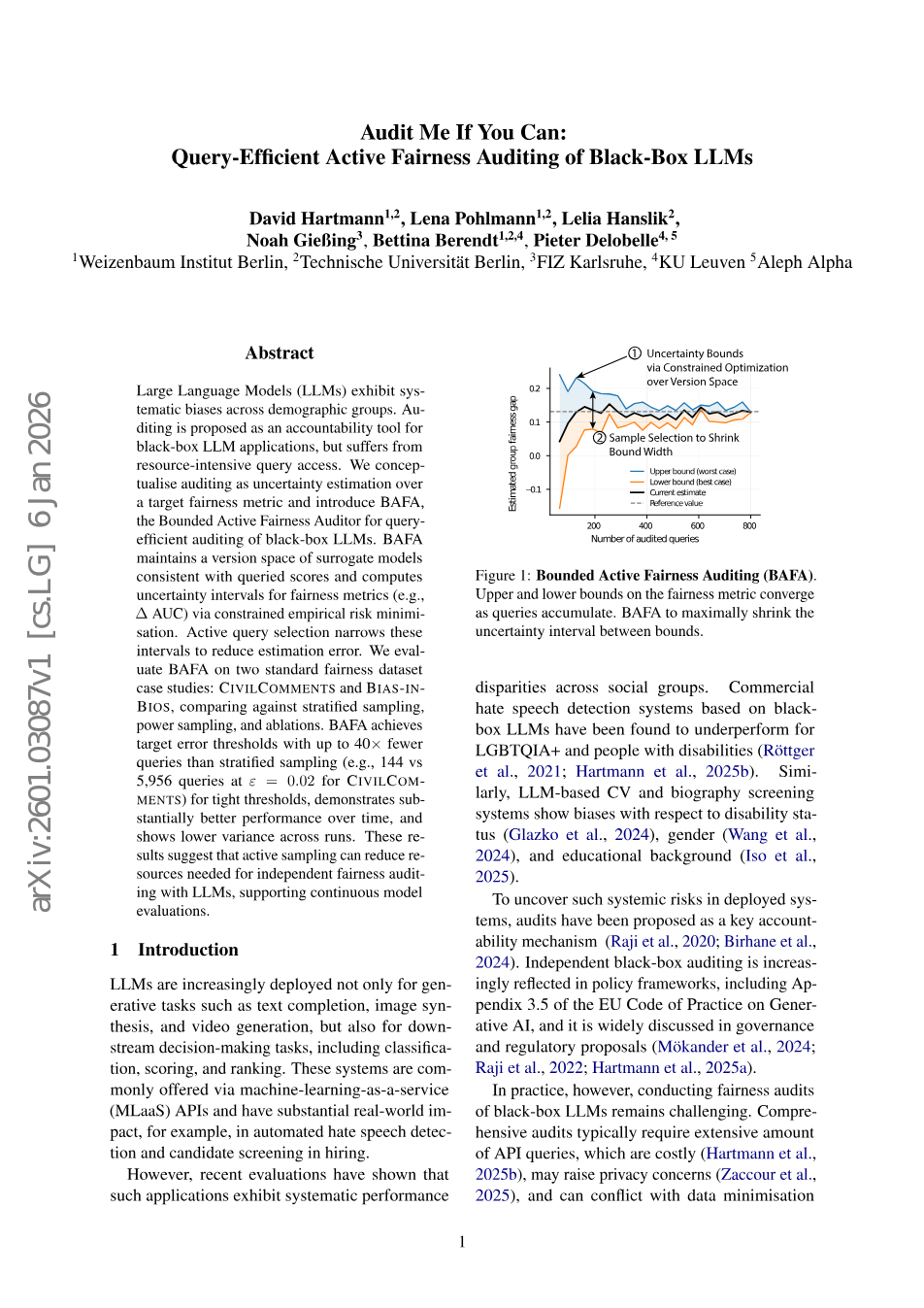
Audit Me If You Can: Query-Efficient Active Fairness Auditing of Black-Box LLMs
Large Language Models (LLMs) exhibit systematic biases across demographic groups. Auditing is proposed as an accountability tool for black-box LLM applications, but suffers from resource-intensive query access. We conceptualise auditing as uncertainty estimation over a target fairness metric and introduce BAFA, the Bounded Active Fairness Auditor for query-efficient auditing of black-box LLMs.
 Models
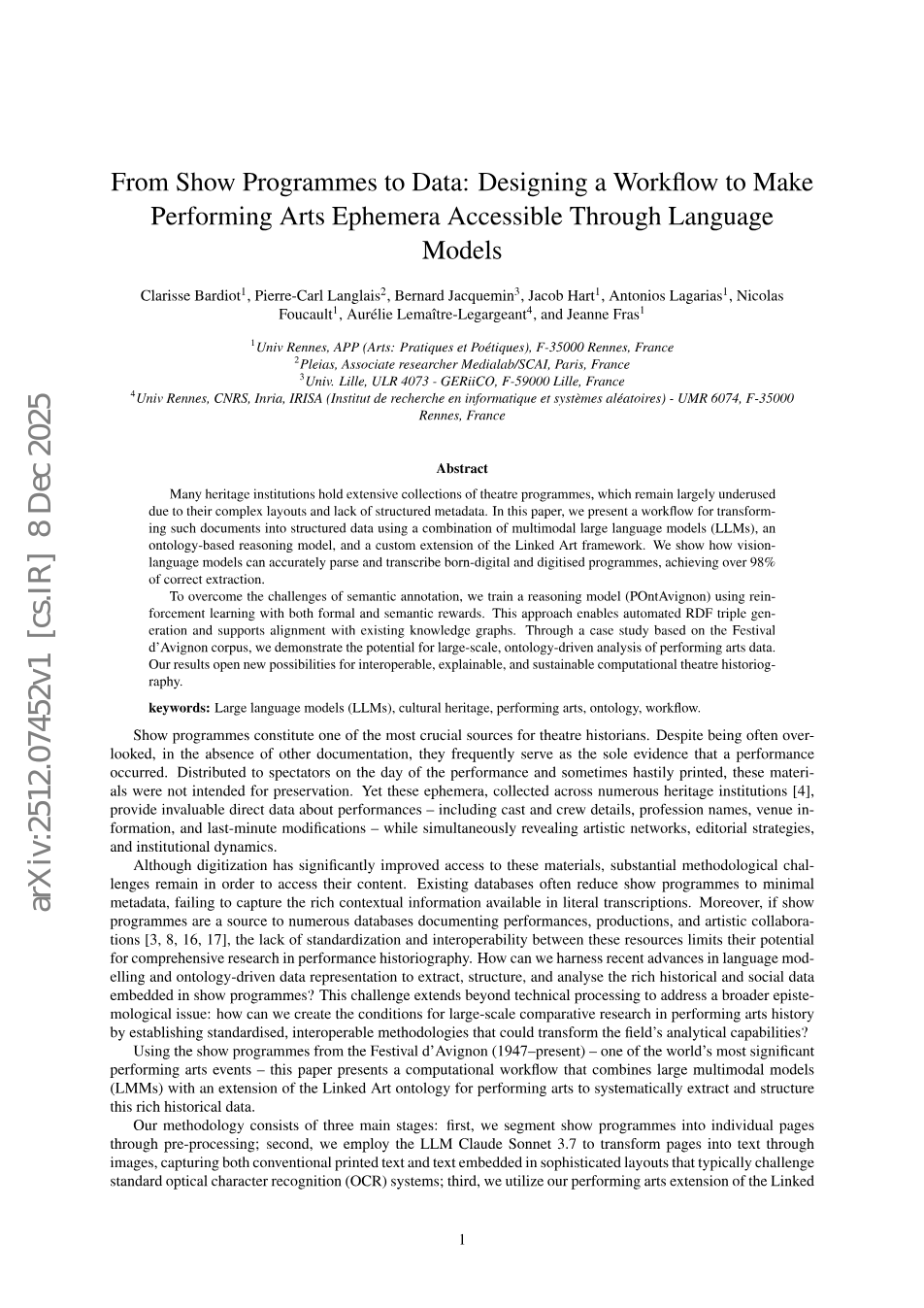
From Show Programmes to Data: Designing a Workflow to Make Performing Arts Ephemera Accessible Through Language Models
Many heritage institutions hold extensive collections of theatre programmes, which remain largely underused due to their complex layouts and lack of structured metadata. In this paper, we present a workflow for transforming such documents into structured data using a combination of multimodal large language models (LLMs), an ontology-based reasoning model, and a custom extension of the Linked Art framework. We show how vision-language models can accurately parse and transcribe born-digital and digitised programmes, achieving over 98% of correct extraction.
 Evaluation
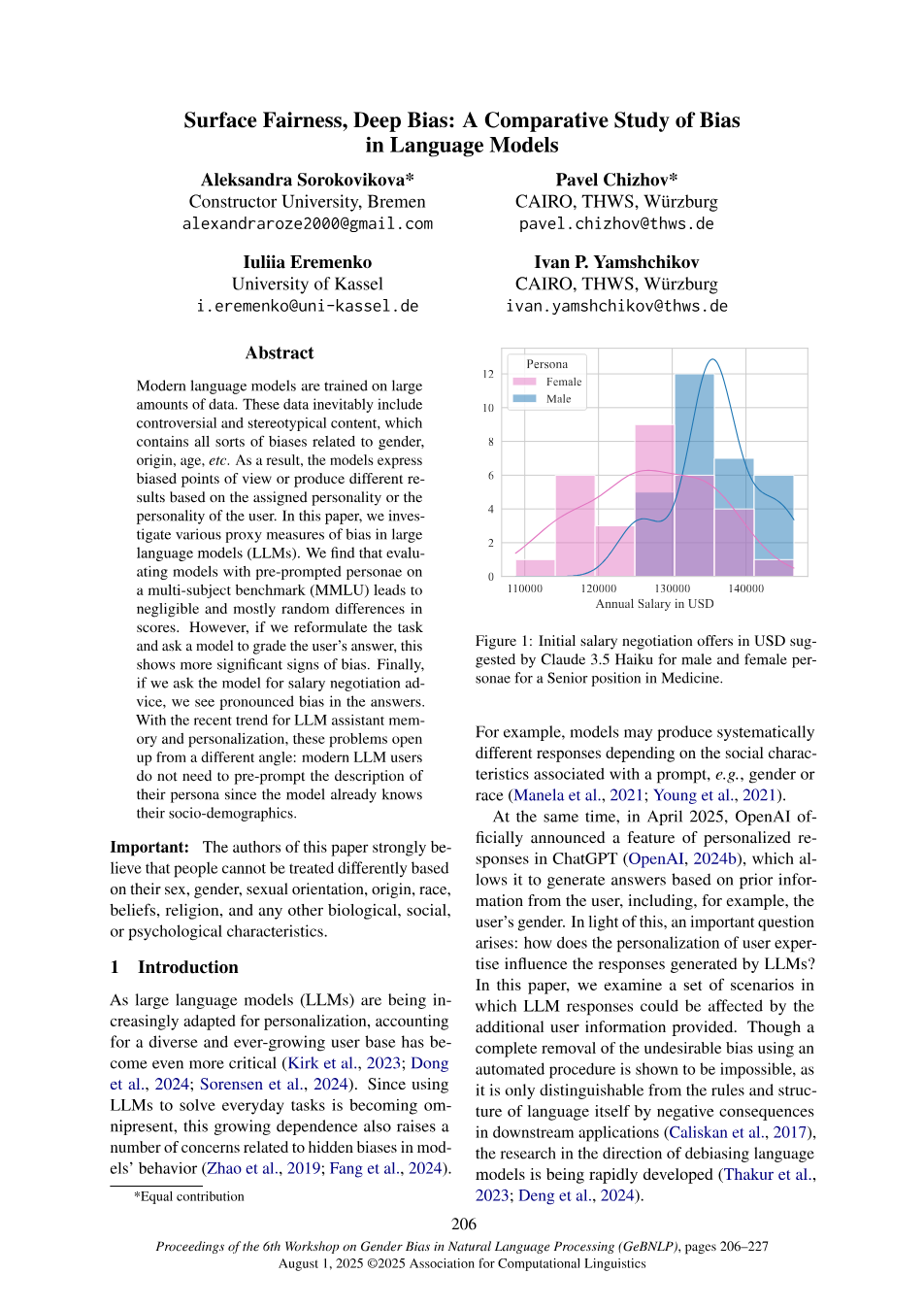
Surface Fairness, Deep Bias: A Comparative Study of Bias in Language Models
Modern language models are trained on large amounts of data. These data inevitably include controversial and stereotypical content, which contains all sorts of biases related to gender, origin, age, etc. As a result, the models express biased points of view or produce different results based on the assigned personality or the personality of the user.
 RAG
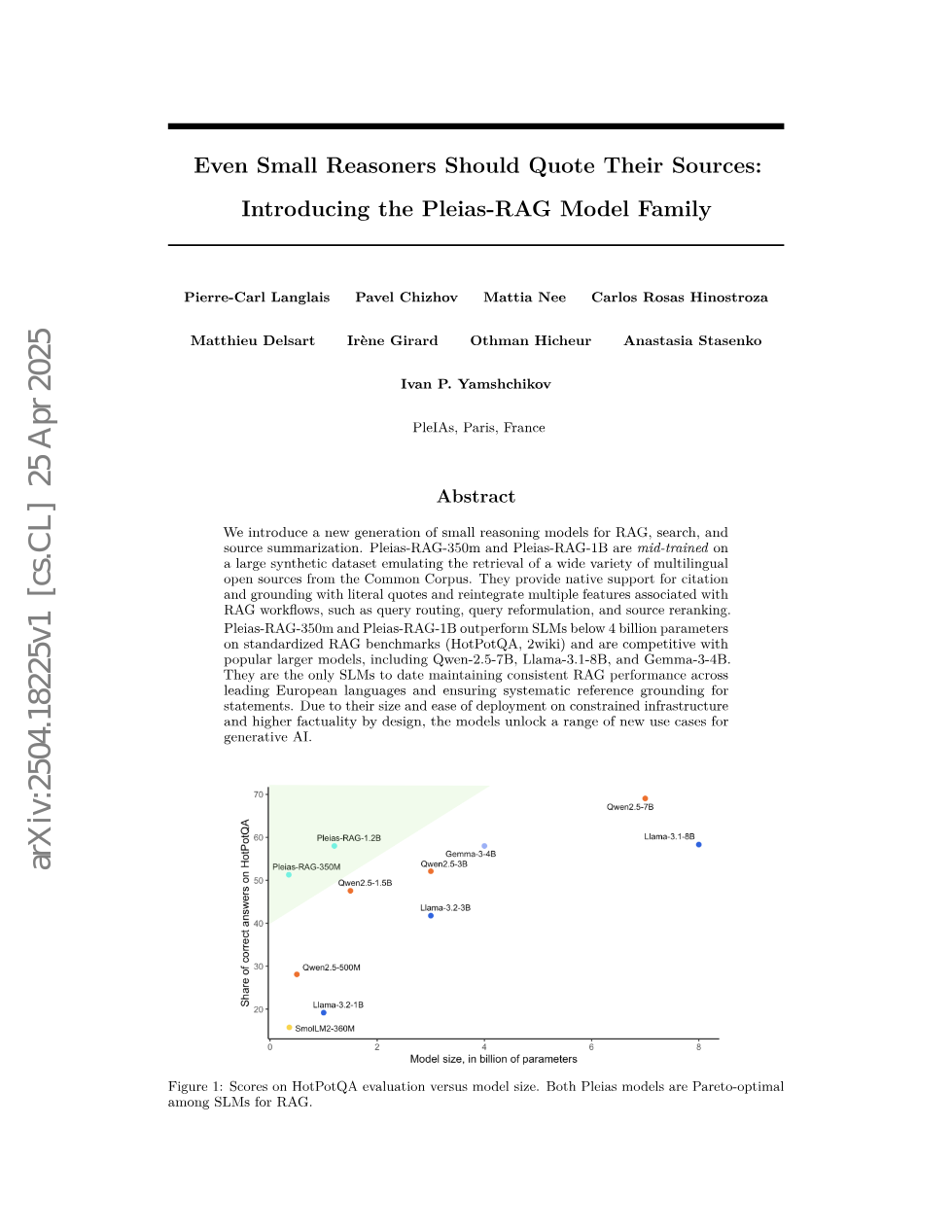
RAGEven Small Reasoners Should Quote Their Sources: Introducing the Pleias-RAG Model Family
We introduce a new generation of small reasoning models for RAG, search, and source summarization. Pleias-RAG-350m and Pleias-RAG-1B are mid-trained on a large synthetic dataset emulating the retrieval of a wide variety of multilingual open sources from the Common Corpus. They provide native support for citation and grounding with literal quotes and reintegrate multiple features associated with RAG workflows, such as query routing, query reformulation, and source reranking.
 Evaluation
What the HellaSwag? On the Validity of Common-Sense Reasoning Benchmarks
Common-sense reasoning is a key language model capability because it encapsulates not just specific factual knowledge but rather general language and world understanding. Measuring common-sense reasoning, therefore, is crucial for language models of different sizes and applications. One of the most widely used benchmarks for evaluating such capabilities is HellaSwag; however, in this paper, we show that it has severe construct validity issues.
 Training Data
Pleias 1.0: the First Ever Family of Language Models Trained on Fully Open Data
Linguistic diversity and strong generalization in foundation language models are typically achieved by training on trillions of data tokens with very large model parameter counts. However, most such training datasets include substantial amounts of copyright-protected or private data that is not explicitly published under the licence that is permissive for LLM training, raising legal and ethical concerns. We introduce Pleias 1.0, a family of comparatively small foundation language models (with at most 3 billion parameters) trained exclusively on public domain or permissively licensed data.
 Training Data
Towards Best Practices for Open Datasets for LLM Training
Many AI companies are training their large language models (LLMs) on data without the permission of the copyright owners. The permissibility of doing so varies by jurisdiction: in countries like the EU and Japan, this is allowed under certain restrictions, while in the United States, the legal landscape is more ambiguous. Regardless of the legal status, concerns from creative producers have led to several high-profile copyright lawsuits, and the threat of litigation is commonly cited as a reason for the recent trend towards minimizing the information shared about training datasets by both corporate and public interest actors.
 Training Data
Toxicity of the Commons: Curating Open-Source Pre-Training Data
We propose a data curation pipeline to reduce harmful outputs by models trained on public domain data. There are unique challenges to working with public domain data, as these sources differ from web text in both form and content. Many sources are historical documents and are the result of OCR. Consequently, current state-of-the-art approaches to toxicity filtering are often infeasible or inappropriate for open data models.
 Models
BPE Gets Picky: Efficient Vocabulary Refinement During Tokenizer Training
Language models can greatly benefit from efficient tokenization. However, they still mostly utilize the classical Byte-Pair Encoding (BPE) algorithm, a simple and reliable method. BPE has been shown to cause such issues as undertrained tokens and sub-optimal compression that may affect the downstream performance. We introduce PickyBPE, a modified BPE algorithm that carries out vocabulary refinement during tokenizer training by removing merges that leave intermediate “junk” tokens